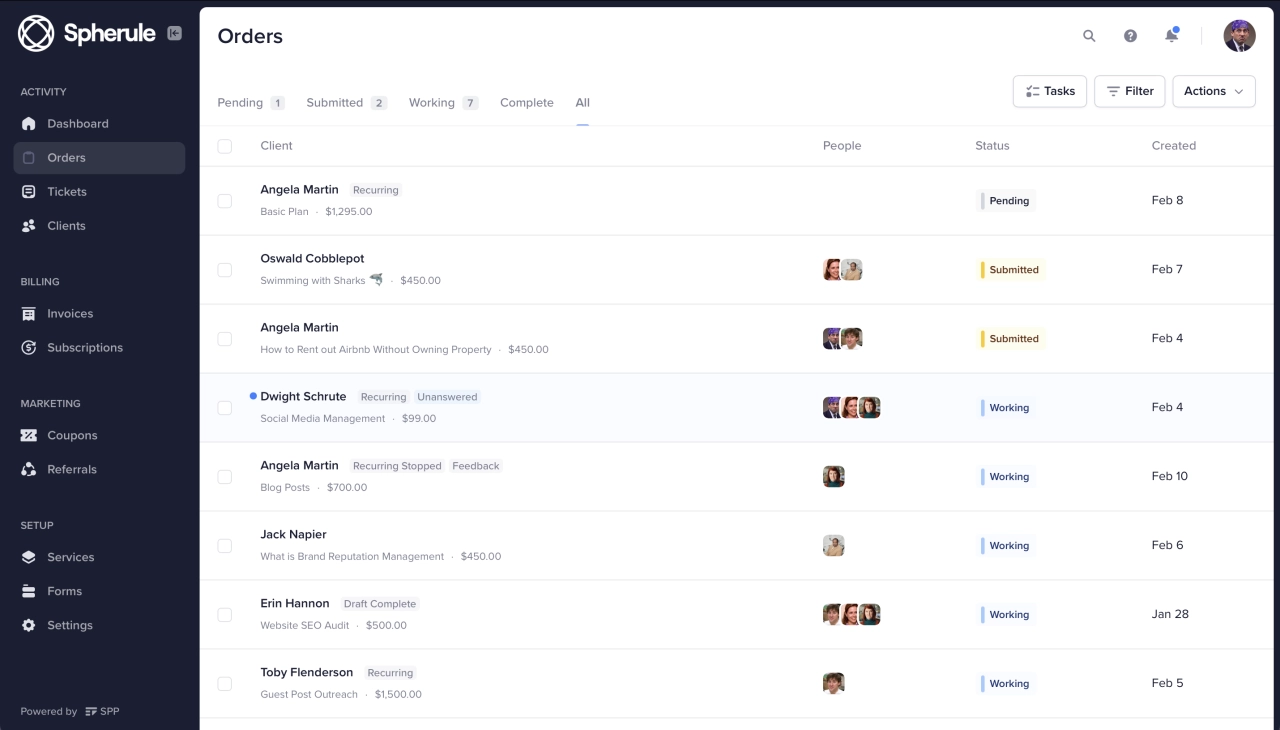
- Productized services work across wildly different industries, but they share the same foundation: niche focus, clear deliverables, and pricing that fits the problem.
- Recurring revenue isn’t the only path. One-time models work when the problem gets solved and stays solved.
- Simpler scales better. Most of these examples offer two or three packages at most.
Productized services come in more shapes than most agency owners realize. Some charge one-time fees. Others build recurring revenue. A few require consultation calls before anyone can buy.
The 13 examples below show what’s actually working across different industries—from WordPress speed optimization to US business formation. Each one runs on SPP.co and has found a model that fits their market.
I’ve grouped them by pricing structure so you can see which approach might work for your service.
Understanding this topic involves several interconnected concepts:
- Productized Service
- Monthly Recurring Revenue (MRR)
- Client Portal
- Account Management
- Lead Generation
Each of these concepts plays a crucial role in the overall topic.
One-time productized services
One-time productized services work best when clients have a specific problem that gets solved and stays solved. Speed optimizations, website builds, listing overhauls—these don’t need ongoing attention. You deliver, they pay, everyone moves on.
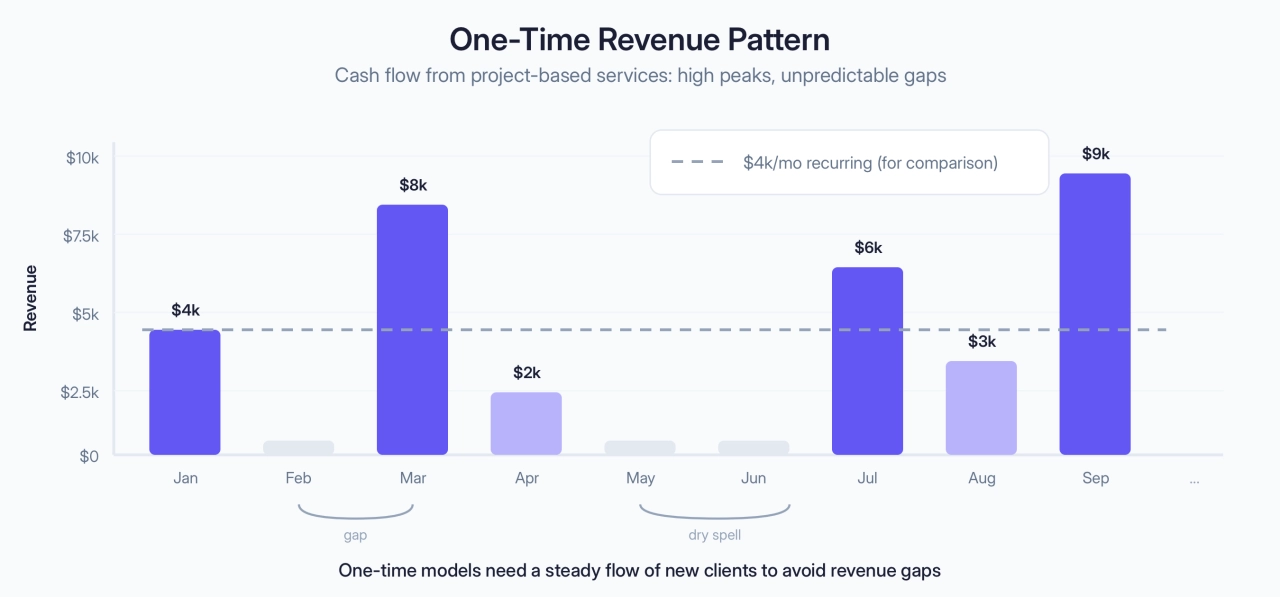
The upside: simpler operations and no subscription management. The tradeoff: you need a steady flow of new clients to maintain revenue.
WordPress speed optimization (WP Speed Fix)
A slow WordPress site isn’t just annoying—it’s expensive. Every second of load time costs conversions, and Google’s Core Web Vitals now directly impact search rankings. Most site owners try the obvious fixes: install a caching plugin, compress some images, hope for the best. It rarely works.
WP Speed Fix has optimized nearly 5,000 WordPress sites since 2015. Founder Brendan Tully started the service as a spinoff from his SEO agency after realizing speed optimization had become too complex for generalist developers to handle well.
The complexity is the point. Their process includes 50+ optimization steps, from database cleanup and PHP tuning to edge caching configuration and Core Web Vitals-specific fixes. They built their own speed testing tool (SiteSpeedBot) because existing options like GTMetrix and Pingdom had gaps in their recommendations.

SPP.co does a lot of the heavy lifting we used to do manually saving us a ton of time & effort. It's fantastic and I recommend it all the time. The way I explain it is that it's kind of like the Shopify for service businesses!Watch the case study →

Pricing is tiered by complexity. Simple Speed Optimization runs $495 for straightforward sites—new builds or low-traffic blogs where the fix is mostly configuration. The $795 Audit, Consult & Implementation tier adds a full site analysis, detailed action plan, and consultation call before any work begins. For sites where SEO is the ultimate goal, a $2,495 bundle combines speed optimization with technical SEO auditing.
The free speed audit doubles as lead generation. Prospects submit their URL, receive an actual analysis of their site’s problems, and see exactly what needs fixing. It’s education-first selling—by the time someone pays, they understand what they’re buying.
One review captures why the model works: “I’ve gone through about 6 companies that claim they can fix Core Web Vitals with no success. WP Speed Fix not only fixed my CWV, they made sure my site blew away my competition.”
Custom signature logos (Photologo)
Most professionals need a signature logo at some point—realtors for yard signs, photographers for watermarks, consultants for email signatures. The problem: hiring a designer means back-and-forth revisions, unclear pricing, and waiting weeks for something that should be simple.
Photologo stripped the process down to one product at one price. For $49, a professional calligrapher creates a custom handwritten signature logo. You get three free revisions, black and white versions, and files formatted for both desktop and mobile use.
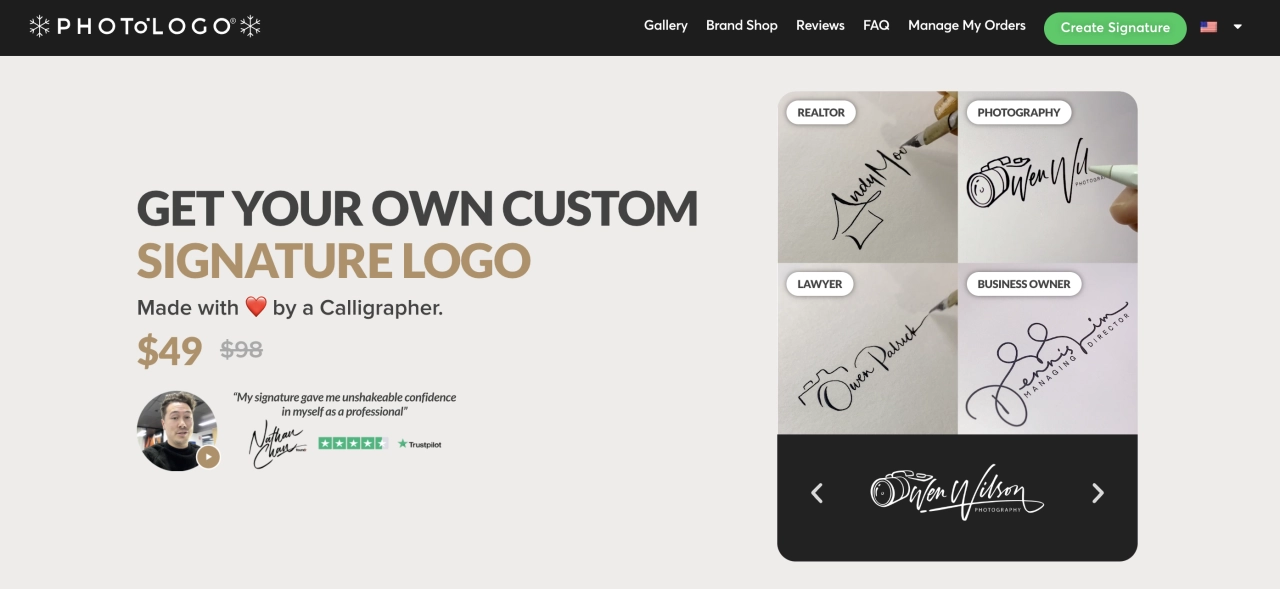
No tiers, no upsells, no consultation calls. Submit your name, receive your logo. The simplicity is the product.
With over 10,000 reviews and features in major publications, they’ve proven the model scales. One deliverable, one price point, massive volume. It’s the opposite of the agency approach—and it works precisely because most people don’t need a $2,000 brand identity package. They need a signature that looks professional.
Amazon listing optimization (KENJI ROI)
Amazon sellers face a brutal math problem: millions of products, limited page-one spots, and shoppers who scroll past anything that doesn’t grab attention in the first two seconds. Most sellers either write their own listings (keyword-stuffed, benefit-weak) or hire generalist copywriters who don’t understand Amazon’s algorithm.
KENJI ROI has spent nine years solving this single problem. They’ve optimized 1,200+ listings for over 1,000 Amazon sellers using what they call the “Triple Optimized” methodology—balancing keyword ranking, conversion rate, and key information in every element from titles to backend search terms.
The core offer is listing copywriting at $397 per product: title, bullet points, description, backend keywords, and a customer research document showing exactly what buyers in that category care about. But most clients stack services—photography packages with lifestyle shoots (produced at their Bali studio with western models), A+ Content design, video, and ongoing PPC management for sellers spending $5,000+ monthly on ads.
Featured in Forbes, Foundr, and Entrepreneur, they’re also part of Amazon’s official Solution Provider Network. Brands like DietDirect and Impact Theory use them for listing optimization.
The model works because Amazon is its own ecosystem with its own rules. KENJI ROI doesn’t do Shopify, eBay, or general e-commerce. That focus means every process, template, and team member is built around one platform’s quirks—from character limits in subject matter fields to exactly where keywords carry ranking weight.
Book cover design (Miblart)
Self-publishing authors know the stakes: readers judge books by their covers. A mediocre design means fewer clicks, fewer sales, and months of writing effort wasted. But most authors aren’t designers, and hiring one feels like a gamble—unclear pricing, subjective revisions, no guarantee the result will actually sell books.
Miblart built their entire business around this problem. Founded in 2015 in Ukraine, the company has grown from a small team to 20+ people including six in-house designers, each with 4+ years of book cover experience. They serve authors across every genre—romance, fantasy, thriller, non-fiction—with pricing that starts at $220 for photo-manipulated covers and scales to $390+ for fully illustrated designs.
The pay-when-satisfied model removes the risk that stops most authors from hiring professional help. No prepayment required for standard covers. You receive watermarked concepts first, request unlimited revisions, and only pay once you approve the final design. For authors on tight budgets, they offer payment installments—spreading the cost across two monthly payments.
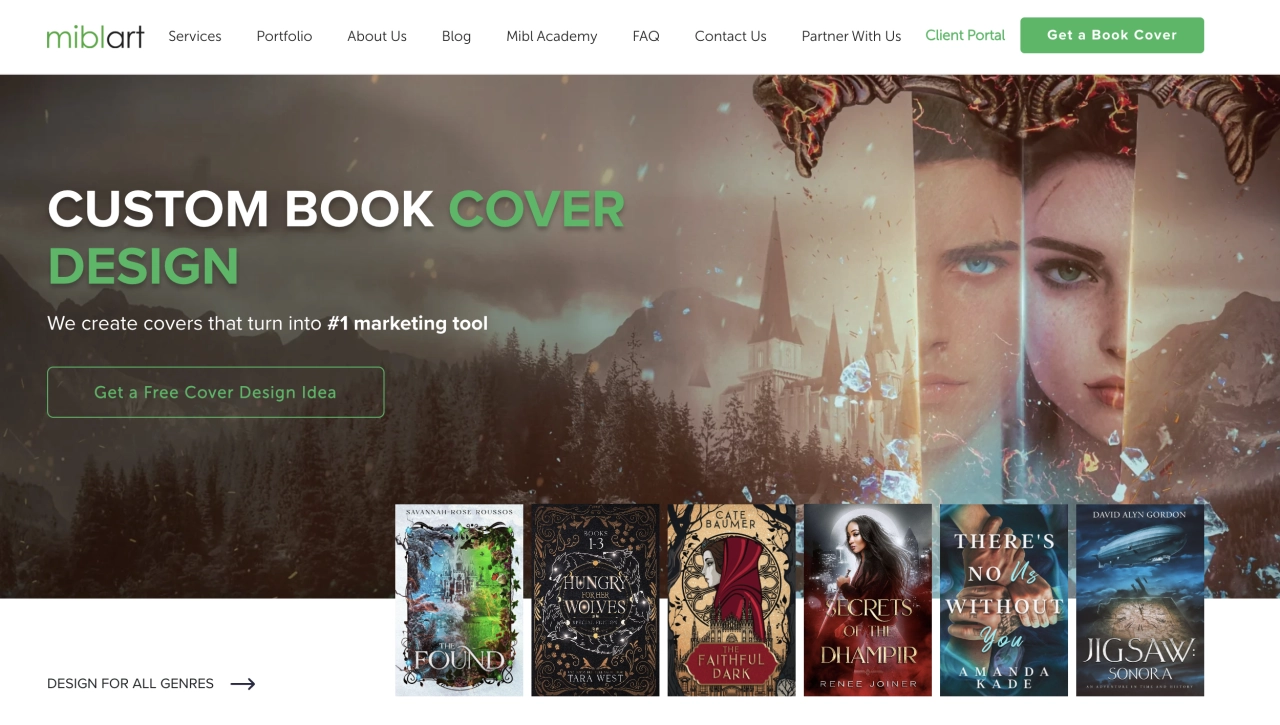
The 9-day average turnaround comes from deep specialization. No logo design, no websites, no general graphic design—just book covers. That focus means designers understand what sells in each category, from paranormal romance tropes to non-fiction authority cues. Their work has won awards from book cover design competitions and earned features in major indie publishing resources including Kindlepreneur, The Creative Penn, and the Alliance of Independent Authors.
To avoid the overused stock photo problem—where the same model appears on dozens of competing covers—Miblart’s designers now create custom faces using 3D rendering technology. Authors get unique imagery without commissioning expensive photoshoots.
The company continued operating through the war in Ukraine, with teams working from shelters during air raids. For a time, all revenue went directly to the Ukrainian military.
Landing page conversion audit (Roast My Landing Page)
You’ve spent hours on your landing page. The copy feels decent, the design looks clean, but something isn’t clicking—literally. Visitors land, scroll, and leave without converting. The problem is you can’t see your own page the way a first-time visitor does.
Roast My Landing Page solves this with radical simplicity. For $350, Oliver Meakings records a 15-minute private video walking through your page and pointing out exactly what’s working, what’s broken, and how to fix it. Delivered within 48 hours. No contracts, no ongoing commitments.
Olly built this business on genuine expertise. He spent years as a CRO freelancer charging £600/day to help large companies optimize their funnels. The insight that became RMLP: most founders don’t need weeks of consulting to dramatically improve their pages. They need 15 minutes with someone who’s seen thousands of landing pages and can instantly spot the patterns.
Each roast covers the fundamentals that actually move conversion rates: headline clarity, pain-building, value proposition positioning, social proof placement, CTA strength, and technical factors like load speed. The format is a single Loom video recorded in one take—no planning, no editing, just expertise captured live. It’s watchable, shareable with team members, and referenceable months later when you’re iterating.
The customer fills in a simple form and pays for their roast. They are then directed to a collection form where I collect more information from them to set the scene. I get an email when they’re booked and pick up the roast in SPP.
 Oliver Meakings,
Roast My Landing Page
Oliver Meakings,
Roast My Landing Page
The money-back guarantee removes the obvious objection. If your conversion rate doesn’t increase after implementing the recommendations, you get a full refund. For most SaaS or e-commerce businesses, one additional customer covers the entire cost of the roast.
With over 850 roasts completed, the model has proven sustainable through volume. At roughly 20 minutes per video, the math works: deep expertise delivered efficiently, at a price point accessible to early-stage founders, in a format that actually gets implemented. The concept has spawned copycats who “roast” everything from UI design to customer support scripts—but Olly’s original remains the benchmark because the expertise behind it is real.
Recurring productized services
Recurring models trade the constant hunt for new clients for predictable monthly revenue. You deliver ongoing value, clients pay monthly, and cash flow stabilizes. This productized business model is what most agency owners aim for.

The tradeoff: you need systems to handle continuous delivery without burning out your team. Churn becomes the metric that keeps you up at night.
Google Business Profile management (GMB Gorilla)
Local search has quietly become half of all Google queries. “Near me” searches, map results, the local pack—they all pull from one place: your Google Business Profile. Most businesses set it up once and forget it. Then they wonder why competitors with worse services show up first.
GMB Gorilla does one thing: Google Business Profiles. Not SEO, not paid ads, not social media. Just GBP setup, optimization, and ongoing management for businesses ranging from single locations to 500+ site enterprises.
The numbers tell the story: 12,392 profiles optimized, 2,861 suspended profiles reinstated, 512 customers served. Featured in Forbes, Wired, and HubSpot.
Pricing is refreshingly simple. Management runs $400/month and covers everything: weekly posts, Q&A monitoring, review responses, photo uploads, and spam profile fighting (competitors gaming the system is a real problem). One-time optimization costs $750 if you already have a listing but aren’t sure it’s performing. New setup is $500. Got a suspension or weird issue Google won’t fix? $500 per incident to have someone who talks to Google reps daily handle it.

SPP.co has been a key ingredient in our winning recipe for a successful productized service. It's easy for staff to use and customers love the client portal software for managing their service account.Watch the case study →

Each client gets a “Gorilla-Certified” account manager and monthly reporting. For agencies, they offer white-label services—your branding, their fulfillment.
The single-service focus is the moat. Google changes GBP rules constantly. GMB Gorilla’s entire team does nothing but track those changes and adapt. That specialization is impossible to match for generalist marketing agencies who treat local SEO as one offering among dozens.
Video editing subscription (Vidpros)
Video content drives results, but editing destroys time. A five-minute YouTube video can take hours to cut, color, caption, and polish. Most businesses either hire expensive in-house editors or bounce between freelancers who disappear mid-project.
Vidpros productized video editing into a subscription—but founder Michael Holmes made a deliberate choice about positioning. While competitors market “unlimited video editing,” Vidpros calls itself a “fractional video editor” service. The distinction matters: unlimited sounds appealing until clients realize they’re sharing an editor with seven other accounts. Vidpros caps it at four clients per editor, guaranteeing at least two hours of dedicated editing time per day.
Pricing reflects that honest positioning. The Part-Time plan runs $1,000/month for 2 hours daily from a dedicated editor with 1-2 day turnaround. Full-Time scales to $4,000/month for 8 hours daily. Both include stock footage, music, AI captions, and simple thumbnails. No contracts, month-to-month only. If someone wants to test before committing, a $100 trial week gets either 10 short-form edits or one polished long video.
The workflow is standardized for speed. Clients submit footage through their portal, editors work overnight (the team is Philippines-based, delivering finished cuts by morning US time), and all review happens through Frame.io—a professional video proofing tool that makes feedback precise down to the frame. Files are stored for three months, so recent projects can be referenced or revised easily.
The client list tells the story: YouTubers ranging from 36K to 580K+ subscribers, agencies like Startup Grind, and content creators across industries. A 4.8 Google rating across 25+ reviews reflects consistent execution. One review summed it up: “Before Vidpros, we were reliant on Fiverr. We encountered countless delays, bad communication, and poor final products. Since we’ve switched, we know when to expect delivery.”
Most of Vidpros’ business comes through white-label partnerships with other agencies. Social media agencies doing strategy but not editing. Marketing firms that need a turnkey video department without the hiring. Holmes built the entire operation around SPP.co specifically because it handles subscription billing alongside project management—the two pieces most agencies cobble together from separate tools.
Social media management (100 Pound Social)
Social media demands consistency. Three posts a week, every week, across multiple platforms. For small business owners already stretched thin, that consistency is the first thing to slip—and once it slips, the algorithm buries you.
100 Pound Social productized the solution with a name that doubles as the value proposition: professional social media management starting at £100 per month. Founded in 2017, they’ve now served over 1,000 B2B businesses with a fully remote UK-based team.
The model is deliberately simple. The Basic tier gets you three posts per week across two platforms (LinkedIn, Facebook, X, Instagram, or Google Business Profile), plus a dedicated account manager. Premium at £170/month adds custom branded graphics, an onboarding call, and post revisions. Pro at £255/month includes five weekly posts plus options for blogs and newsletters from the same team.

SPP.co has been key to scaling up my social media agency. Since joining SPP.co, our client base has grown by 215%. It allows us to easily sell services, manage client and team communications, organize payment subscriptions, and run our affiliate scheme.Watch the case study →

Every piece of content is written by UK-based writers—no AI, no templates. Clients complete an onboarding form, receive their first month’s content within 10 days for approval, and can request changes before anything goes live. A 20-day money-back guarantee removes the risk of trying the service.
The results show up in client metrics. Lee Mills from Guiding Edge reported 858% increased impressions and 50% more web visitors. Alan Giles at Fractional Execs calculated the service “gave us back a day a week and saved £400 a month in marketing costs.” Assessment Hive signed one of their best clients in the second or third month.
For businesses that need LinkedIn prospecting on top of posting, a separate Lead Generation plan at £254/month targets 100 prospects weekly with personalized messaging sequences—turning social presence into actual pipeline.
Podcast editing (We Edit Podcasts)
Podcasting sounds simple until you’re three episodes in, buried in audio files, wondering why editing takes longer than recording. Most hosts either burn out on production or pay agency rates for something that should be straightforward.
We Edit Podcasts built their entire business around that gap. Audio editing starts at $440/month for two episodes, scaling to $800/month for four. Need video? That’s $980 to $1,800/month depending on volume. Every tier includes a dedicated editor, 72-hour turnaround, and episode uploading handled for you.
The pricing is transparent and the scope is fixed—no surprise invoices when an episode runs long. Clients know exactly what they’re paying before they sign up.
Nine years in business, 4,000+ customers, and over a billion total listens across the shows they support. Those numbers come from doing one thing well: taking raw recordings and turning them into publish-ready episodes, reliably, at scale.
They’ve resisted the temptation to become a full-service podcast agency. No strategy consulting, no guest booking, no launch packages. Just editing and production, priced by volume, delivered fast.
Mobile app conversion (MobiLoud)
Every e-commerce brand eventually asks the same question: should we build an app? The answer is usually yes—apps drive higher engagement, better retention, and direct access to customers through push notifications. The problem is execution. Custom app development runs $250,000+ per year and requires dedicated technical teams. No-code builders promise shortcuts but hit walls fast when you need real functionality.
MobiLoud productized the entire process. They convert existing websites into native iOS and Android apps without rebuilding anything. Your site becomes your app—automatically synced, no separate codebase to maintain.
The model is fully managed: 30-day launch timeline, app store submissions handled, ongoing maintenance included. You’re not buying software and figuring it out yourself. You’re hiring a team that does everything.
The moment we had everything set up, like, it was very clear in the first week, like, we made a really good choice here. Because now it’s clear that all the information is going into the same place and everything’s centralized.
 Vitor Argos,
MobiLoud
Vitor Argos,
MobiLoud
Pricing scales with your growth. Startup plans run $399/month with an $850 setup fee, covering up to 1,000 active users. Growth plans jump to $799/month ($1,500 setup) for brands with up to 5,000 users. Corporate pricing is custom for larger deployments.
Over 2,000 brands use MobiLoud, including Bestseller, Jack & Jones, John Varvatos, and BoozeBud. That client roster signals something important: enterprise companies trust this model enough to skip building in-house.
Hybrid and consultation-first models
Not every service fits neatly into fixed pricing. Some need a qualification step—either because the work varies too much, or because the price point is high enough that prospects expect a conversation first.
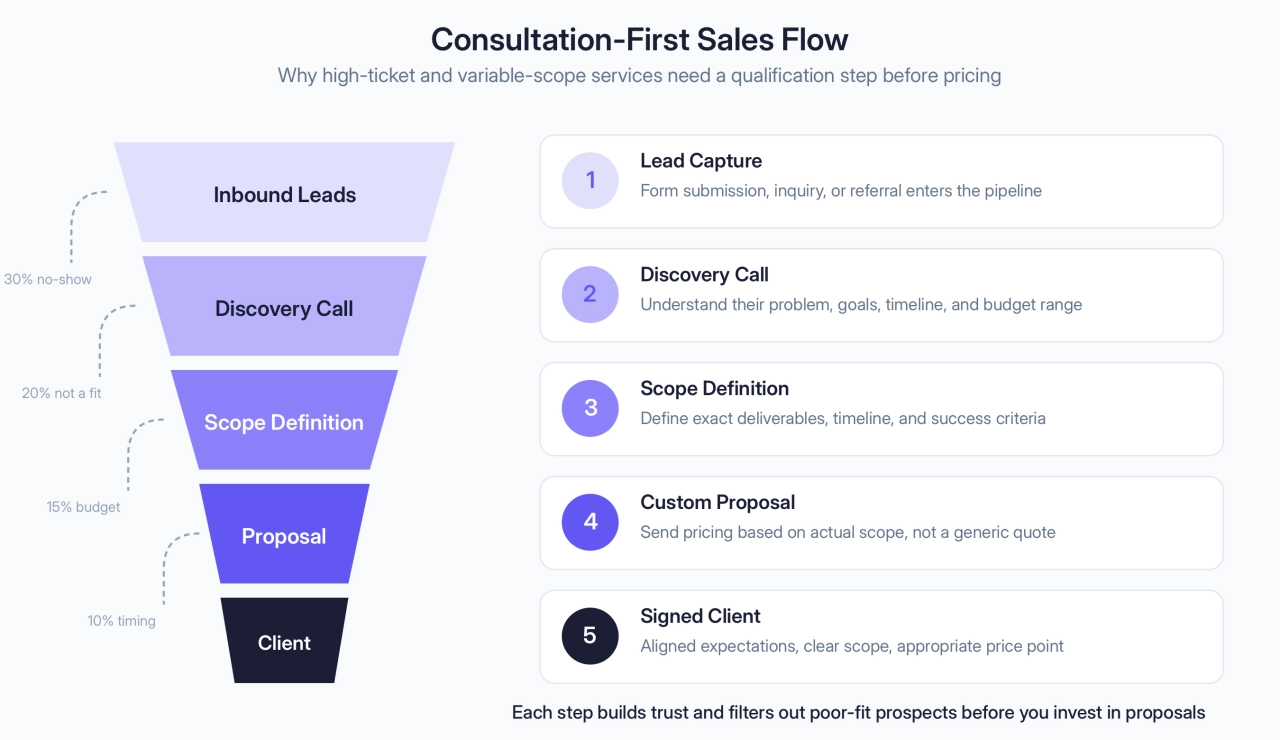
These models use consultation calls as a filter: they build trust, qualify leads, and scope projects before anyone commits.
Conversion tracking setup (Measurely)
iOS 14 broke Facebook tracking. Google killed Universal Analytics. Every platform update seems designed to make attribution harder. For agencies running paid media, unreliable conversion data isn’t a minor inconvenience—it’s the difference between proving ROI and guessing at it.
Measurely handles conversion tracking so media buyers can focus on media buying. Founder Jonathon Deakins built the service while working as a Tracking Specialist at Tier 11, one of the largest Facebook ads agencies. He saw the same pattern repeatedly: agencies needed expert-level tracking implementation but couldn’t justify a full-time specialist.
The service covers the full spectrum of tracking headaches: Facebook CAPI optimization, GA4 migration, Google Ads conversion fixes, server-side tracking implementation, and event match quality improvements. Submit a request through their dashboard, get matched with a specialist, and receive completed work within 48 hours.
Pricing is project-based rather than hourly—scope varies too much between a simple landing page and a complex multi-step funnel. The fixed-price model means agencies know exactly what they’re paying before work begins.
The niche is narrow by design. Measurely doesn’t offer ongoing analytics partnerships or try to become a fractional CMO. They fix the specific tracking problem, hand it back, and move on. For agencies managing multiple client accounts across ad platforms, that focused expertise is exactly what’s needed—without the overhead of training someone internally or the risk of getting it wrong.
US LLC formation (Expert LLC USA)
Non-US entrepreneurs face a frustrating chicken-and-egg problem: you need a US business entity to access Stripe, PayPal, and American bank accounts—but forming one from overseas means navigating unfamiliar legal requirements, IRS compliance, and banking restrictions designed for residents.
Expert LLC USA productized the entire process for francophone entrepreneurs. They handle LLC formation, EIN acquisition, registered agent services, US address, and bank account setup—all without the client ever setting foot in America.
Pricing scales with speed and support level. The Basique tier starts at $579 for standard LLC formation with EIN. Confort ($849) adds first-year tax declarations. Premium ($2,249) delivers the EIN in 48 hours with priority support. Prestige ($4,000) creates a Wyoming LLC in 24 hours, includes ITIN acquisition, and bundles 12 months of bookkeeping.

The real productization is in ongoing compliance. US LLCs require annual IRS filings—miss them and you’re looking at $25,000 penalties. Expert LLC USA packages this as a $899/year compliance bundle: registered agent renewal plus tax declaration handling. Clients pay once for setup, then stay for the peace of mind.
With 1,500+ clients across 25+ countries and 15+ years of experience, they’ve built a business on a narrow wedge: one language community, one specific legal structure, one ongoing compliance need.
SEO content at scale (Contentellect)
Most businesses know they need content to rank. The math is brutal: a new site needs roughly 100 quality articles to build enough topical authority for Google to take it seriously. That's months of full-time writing—or years if you're squeezing it between client work.
Contentellect built their entire operation around this bottleneck. Founded by Mark Whitman, the agency produces SEO content and link building for over 1,000 companies—from solo founders to enterprise brands like WeTravel and EA. One agency partner alone runs 230,000 words through them monthly.
The model flexes between project and recurring. Pay-as-you-go lets you order individual blog posts when you need them—no commitment, no minimums. Monthly blog management handles everything: topic planning, keyword research, writing, editing, and delivery on a fixed schedule. For agencies needing serious volume, content-at-scale packages cover hundreds of articles with dedicated account management.
The competitive advantage comes from the team. All writers are native English speakers based in South Africa—same quality as US or UK writers at more accessible rates. Every client gets an assigned account manager who learns their business, tone, and products. The manager creates briefs, coordinates with writers, proofreads everything, and can even publish directly. It's like having an in-house content team without the overhead.

The tool these guys have built is fantastic. It solves all the problems we have and is reasonably priced.Watch the case study →

Link building runs as a separate productized line: guest posts on niche-relevant sites, link insertions into existing articles, and HARO outreach that's landed placements in The Washington Post and USA Today. Monthly packages provide steady link velocity without the outreach grind.
White-label services turned into a growth engine. Over 65 agencies now resell Contentellect's work under their own brand—no hard selling required because the agencies handle client relationships. It's recurring revenue without the acquisition cost.
The 4.6 Trustpilot rating reflects what clients keep saying: reliable quality, consistent delivery, and account managers who actually understand their business. For agencies and brands that need content produced faster than they can write it, that consistency is worth more than any individual article.
Pricing models at a glance
Each example above uses a different approach to packaging and pricing. Some keep it dead simple—one service, one price. Others layer in tiers, add-ons, or consultation gates. Here’s how they break down:
Service | Model | Price Range | Target Client |
|---|---|---|---|
WP Speed Fix | One-time | $495–$795 | WordPress site owners |
Photologo | One-time | $49 | Professionals needing signature logos |
KENJI ROI | One-time | Quote-based | Amazon sellers |
Miblart | One-time (tiered) | $220–$390+ | Self-publishing authors |
Roast My Landing Page | One-time | $350 | Founders, marketers |
GMB Gorilla | Recurring | $400/mo | Local businesses |
100 Pound Social | Recurring (tiered) | £100–£255/mo | Small businesses |
Vidpros | Recurring (tiered) | $1,000–$4,000/mo | Content creators, marketing teams |
We Edit Podcasts | Recurring (tiered) | $440–$1,800/mo | Podcasters |
MobiLoud | Recurring + setup | $399–$799/mo + $850–$1,500 setup | E-commerce brands |
Contentellect | Hybrid | Quote-based | Agencies, businesses needing SEO content |
Measurely | Hybrid | Quote-based | Agencies needing tracking setup |
Expert LLC USA | Hybrid + recurring | $579–$4,000 setup + $899/yr | Non-US entrepreneurs |
Finding the right productized service idea
The examples above span wildly different industries, but they share one thing: product-founder fit. Olly can roast landing pages because he has 20+ years in conversion optimization. Brendan built WP Speed Fix because he understood WordPress performance inside out.
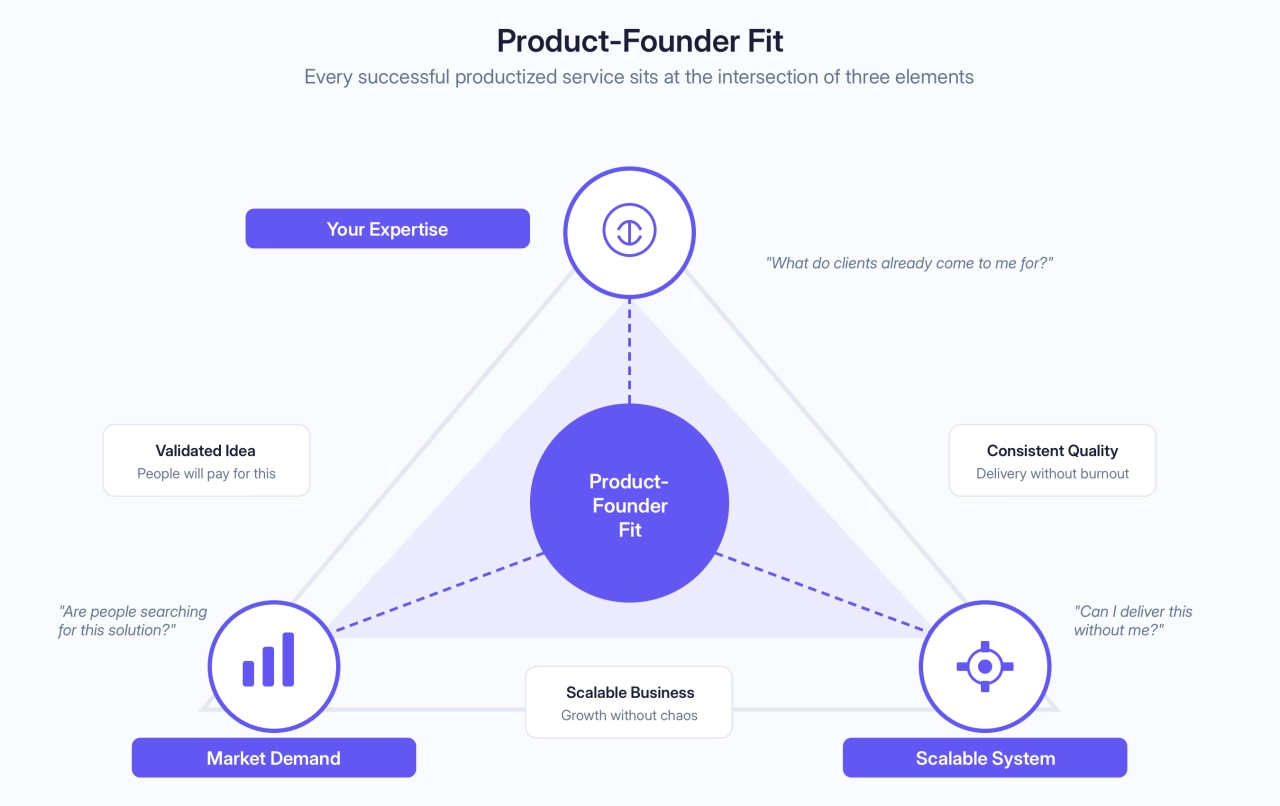
Your productized service should come from the same place. A few starting points:
Look at your background for strengths that make you unique—what do clients already come to you for?
Validate demand before building. Use Google Trends or keyword tools to check if people are actually searching for what you want to offer.
Define your ideal customer so you know exactly who you’re marketing to.
Once you have a concept, test it. Run ads, get feedback, iterate. Don’t build elaborate systems until you’ve proven people will pay.
Setting up your productized service
You can run a productized service on spreadsheets. Many people do, at least initially. The problem comes when you try to scale—tracking orders, managing clients, handling payments, and coordinating delivery all in different places breaks down fast.
What you need changes as you grow—a solo founder with five clients has different requirements than a team handling forty.
When you’re ready for something more structured, SPP.co handles the operational side: intake forms, order management, client portals, and payment processing in one place. It’s built specifically for productized services and agencies.
To create your first service:
Go to Services in the sidebar
Click Add service
Fill out the details—name, pricing, intake questions
From there you can add team members with roles and permissions, track projects, and automate the repetitive parts.
Frequently asked questions
How do I create my own productized service?
Start by identifying a repeatable problem you already solve well. Package it with fixed scope, fixed pricing, and a clear deliverable. Our full guide on productizing a service walks through the process step by step.
What challenges should I prepare for?
Pricing mistakes, scope creep, and cash flow gaps during the transition are the most common killers. The 8 challenges every agency owner should plan for covers what goes wrong and how to prevent it.
How do I maintain quality as I scale?
Systems. You need documented processes, proper training, and quality control that doesn’t depend on you reviewing every deliverable. The 3-pillar framework for scaling productized services breaks down exactly how to build this.
Which pricing model should I choose?
Depends on your service and market. One-time works for problems that get solved and stay solved. Recurring fits ongoing delivery where clients need continuous support. Consultation-first makes sense for high-ticket or variable-scope work. Look at the examples above and see which matches your situation.
Can any service be productized?
Not always. Services requiring heavy customization for every client or deep ongoing collaboration don’t fit rigid packages well. If you’re unsure, check whether your service is right for productization before investing time in building systems.
Conclusion
These 13 businesses found models that fit their market and their strengths. Some charge once, some charge monthly, some qualify leads first. The common thread: they all picked a niche, defined clear deliverables, and built systems that scale. Your version will look different—but the principles stay the same.